mygreenbin

Turn Daily Food Waste Into Valuable Compost, Right Where It Is Generated.

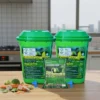
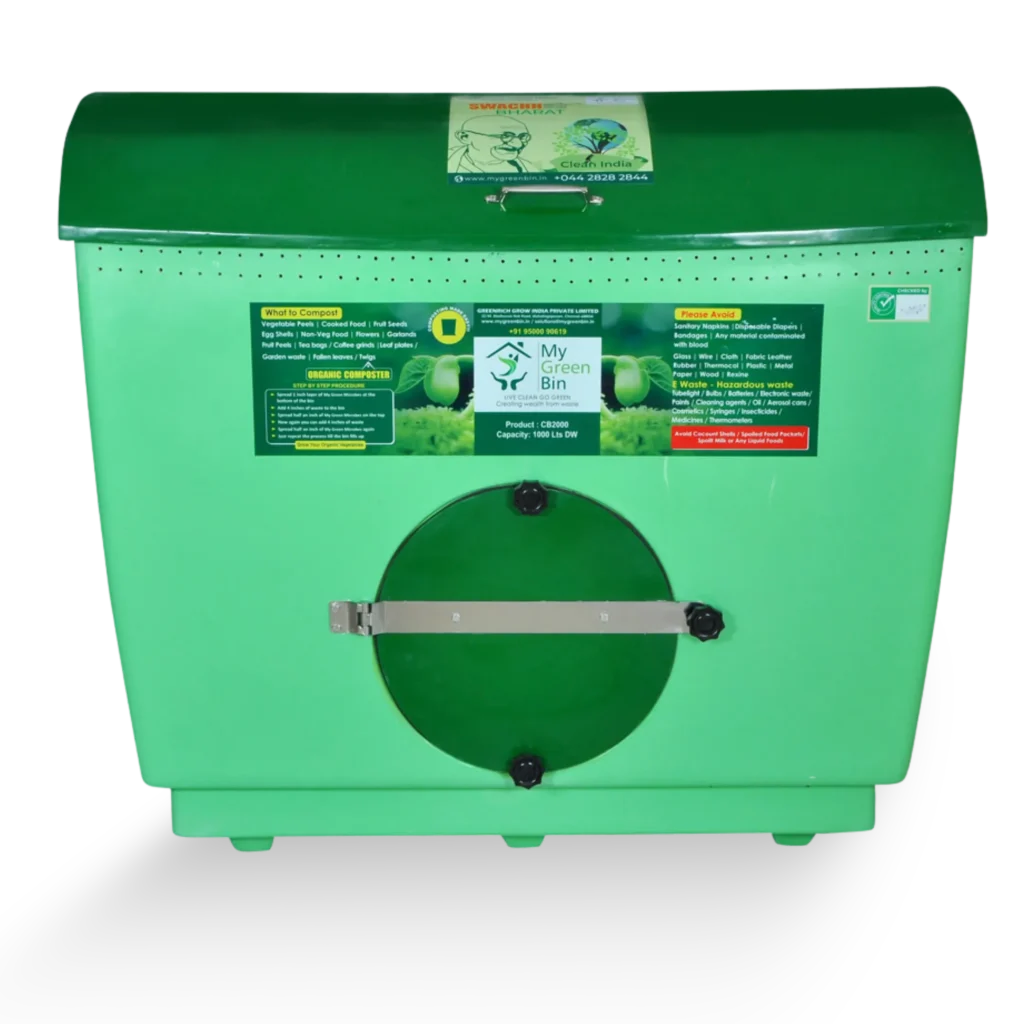
MyGreenBin Community Composter is designed for apartments, gated communities, hostels, schools and institutions that want a practical way to manage biodegradable kitchen and food waste at source.

10–100 kg/day

solution range*

Community scale

shared-space operation

Local composting

manage waste at source

Why Community Composting?

Manage Organic Waste Closer to the Source

Large residential communities and institutions generate food waste every day. When biodegradable waste is separated and composted locally, it can be converted into a useful soil input instead of being mixed with general waste.

The MyGreenBin Community Composter provides a compact, easy-to-operate system for organised on-site composting in shared spaces.

Designed for Shared Spaces

One Composting Solution. Multiple Community Applications.

🏬

Apartments

Manage segregated kitchen waste from multiple households within the premises.
🏠

Gated Communities

Create a decentralised organic waste management system for residential communities.

🏫

Schools & Colleges

Process canteen and food waste while supporting practical sustainability education.

🏢

Hostels

Handle recurring food preparation and dining waste in a structured way.

🏛️

Institutions

A practical solution for workplaces, campuses and other shared facilities.

💬

Need Help Sizing?

Choose a system based on your daily waste generation, available space and operating pattern.

Talk to MyGreenBin →
Built for Practical Operation

Community Composting Without Unnecessary Complexity

01

Easy to Operate

Designed for routine use by facility teams and community operators.

02

Space Conscious

Can be planned for setback areas, terraces and suitable open spaces.

03

Modular Approach

Multiple units can be used where larger daily waste volumes need to be handled.

04

Useful End Product

Properly matured compost can be used for gardens, landscaping and green areas.

Simple Workflow

How Community Composting Works

A good community composting system starts with segregation and consistent daily operation.

01

Segregate at Source

Keep biodegradable kitchen and food waste separate from plastic, glass, metal and other dry waste.

02

Prepare the Waste

Remove contaminants and reduce oversized material where required for more consistent processing.

03

Load the Composter

Add segregated organic waste according to the recommended daily operating capacity.

04

Balance & Maintain

Use dry material or recommended composting inputs and maintain suitable moisture and aeration.

05

Allow Decomposition

Organic material breaks down through a managed biological process.

06

Cure & Use the Compost

Allow the material to mature fully before using it in gardens and landscaping.

Waste Segregation Guide

What Goes Into the Community Composter?

Suitable Organic Waste

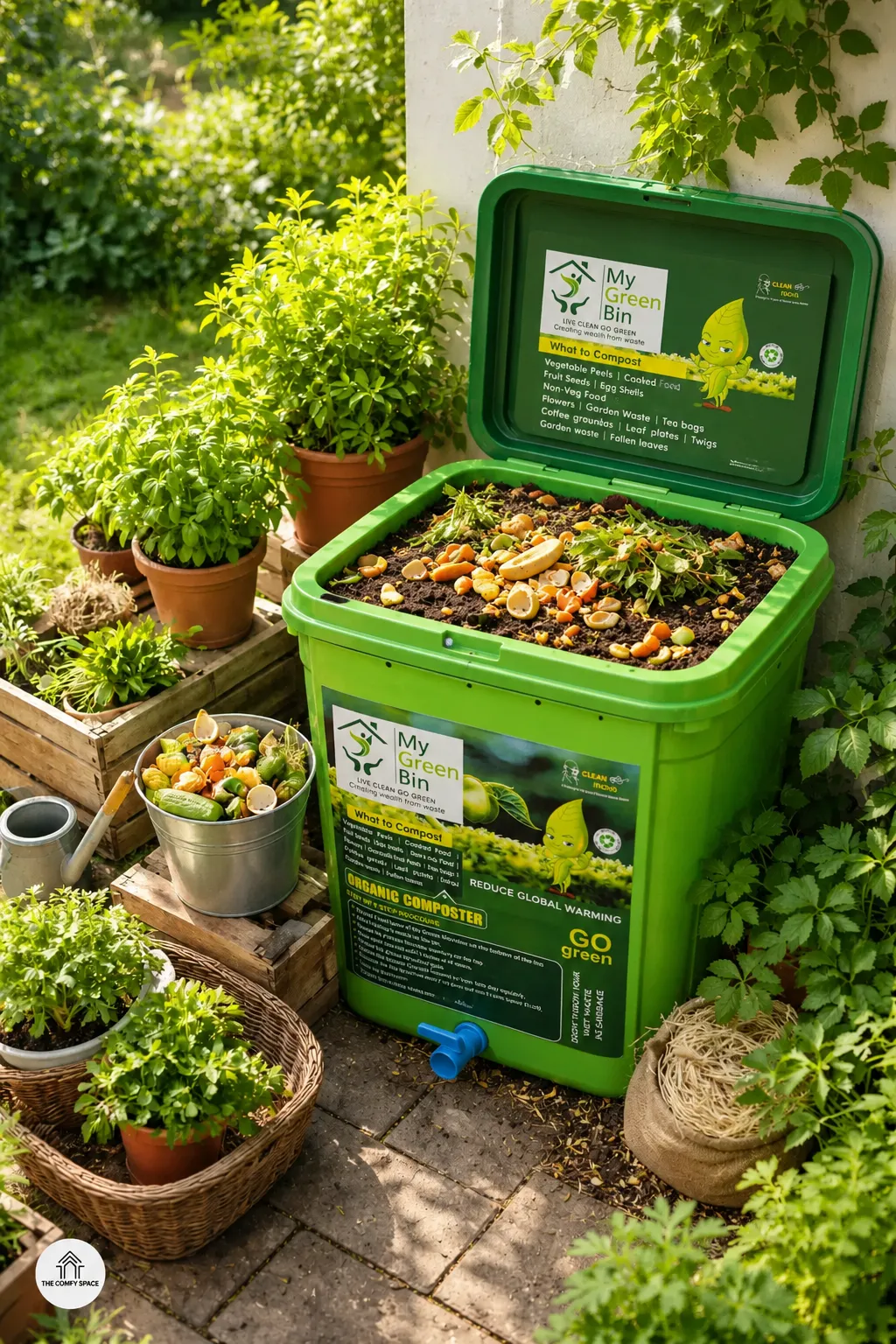
  • Vegetable and fruit scraps
  • Food preparation waste
  • Tea and coffee waste
  • Small amounts of leftover food
  • Flowers and suitable garden organics
  • Dry leaves and carbon-rich material
×

Keep These Out

  • Plastic and multilayer packaging
  • Glass
  • Metal
  • Batteries and e-waste
  • Chemicals and cleaning liquids
  • Medical and sanitary waste
Community composter installation
Product Highlights

Designed Around Real Community Operations

FRP Construction

Durable community composter formats are available in FRP construction.

Easy Access

Designed to support regular loading and routine composting operations.

Scalable Configuration

Additional units can be planned for communities with higher waste volumes.

Flexible Placement

Installation can be considered in suitable setback, open or terrace spaces.

Need the Right Configuration?

Tell Us How Much Organic Waste You Generate Each Day.

MyGreenBin can help you identify a suitable Community Composter configuration based on your daily waste volume, location and available installation space.

Frequently Asked Questions

Community Composter FAQs

Who is the Community Composter designed for?

It is intended for shared waste generators such as apartments, gated communities, hostels, schools and institutions.

How do I choose the right composter capacity?

Start with your average daily biodegradable waste generation, then consider available space, collection frequency and operating practices.

Can the system be installed on a terrace?

Some formats can be considered for terrace or open-space installation, subject to structural suitability, access, drainage and site conditions.

Does all food waste go directly into the composter?

Waste should be properly segregated first. Non-biodegradable contaminants must be kept out.

What happens to the finished compost?

After suitable curing and maturity, compost can be used for gardens, landscaping and other appropriate soil applications.

Community Composter for Apartments, Schools & Institutions | MyGreenBin
Community-Scale Organic Waste Management

Turn Daily Food Waste Into Valuable Compost, Right Where It Is Generated.

MyGreenBin Community Composter is designed for apartments, gated communities, hostels, schools and institutions that want a practical way to manage biodegradable kitchen and food waste at source.

10–100 kg/daysolution range*
Community scaleshared-space operation
Local compostingmanage waste at source
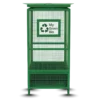
Community Composter
MyGreenBin Community Composter
Built for shared spaces Simple. Scalable. Sustainable.
Why Community Composting?

Manage Organic Waste Closer to the Source

Large residential communities and institutions generate food waste every day. When biodegradable waste is separated and composted locally, it can be converted into a useful soil input instead of being mixed with general waste.

The MyGreenBin Community Composter provides a compact, easy-to-operate system for organised on-site composting in shared spaces.

Designed for Shared Spaces

One Composting Solution. Multiple Community Applications.

A

Apartments

Manage segregated kitchen waste from multiple households within the premises.
G

Gated Communities

Create a decentralised organic waste management system for residential communities.

S

Schools & Colleges

Process canteen and food waste while supporting practical sustainability education.

H

Hostels

Handle recurring food preparation and dining waste in a structured way.

I

Institutions

A practical solution for workplaces, campuses and other shared facilities.

+

Need Help Sizing?

Choose a system based on your daily waste generation, available space and operating pattern.

Talk to MyGreenBin →
Built for Practical Operation

Community Composting Without Unnecessary Complexity

01

Easy to Operate

Designed for routine use by facility teams and community operators.

02

Space Conscious

Can be planned for setback areas, terraces and suitable open spaces.

03

Modular Approach

Multiple units can be used where larger daily waste volumes need to be handled.

04

Useful End Product

Properly matured compost can be used for gardens, landscaping and green areas.

Simple Workflow

How Community Composting Works

A good community composting system starts with segregation and consistent daily operation.

01

Segregate at Source

Keep biodegradable kitchen and food waste separate from plastic, glass, metal and other dry waste.

02

Prepare the Waste

Remove contaminants and reduce oversized material where required for more consistent processing.

03

Load the Composter

Add segregated organic waste according to the recommended daily operating capacity.

04

Balance & Maintain

Use dry material or recommended composting inputs and maintain suitable moisture and aeration.

05

Allow Decomposition

Organic material breaks down through a managed biological process.

06

Cure & Use the Compost

Allow the material to mature fully before using it in gardens and landscaping.

Close the Loop Locally

Waste From the Community. Compost for the Community.

A decentralised approach helps communities keep organic material in circulation and use the finished compost close to where the waste was generated.

Choose the Right Capacity

Community Composter Options

Select a model according to waste volume, available installation space and the number of participating households or users.

Compact

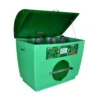
GRC 250

250 L

Compact FRP community composter format for smaller installations.

  • Community-scale organic waste use
  • Compact installation footprint
  • FRP construction
Higher Capacity

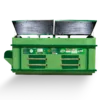
GRC 1000

1000 L

Higher-capacity FRP format for larger shared-space requirements.

  • Community-scale application
  • Suitable for larger waste streams
  • FRP construction

*Final sizing should be based on actual daily waste generation and operating conditions.

Waste Segregation Guide

What Goes Into the Community Composter?

Suitable Organic Waste

  • Vegetable and fruit scraps
  • Food preparation waste
  • Tea and coffee waste
  • Small amounts of leftover food
  • Flowers and suitable garden organics
  • Dry leaves and carbon-rich material
×

Keep These Out

  • Plastic and multilayer packaging
  • Glass
  • Metal
  • Batteries and e-waste
  • Chemicals and cleaning liquids
  • Medical and sanitary waste
Community composter installation
Product Highlights

Designed Around Real Community Operations

FRP Construction

Durable community composter formats are available in FRP construction.

Easy Access

Designed to support regular loading and routine composting operations.

Scalable Configuration

Additional units can be planned for communities with higher waste volumes.

Flexible Placement

Installation can be considered in suitable setback, open or terrace spaces.

Frequently Asked Questions

Community Composter FAQs

Who is the Community Composter designed for?

It is intended for shared waste generators such as apartments, gated communities, hostels, schools and institutions.

How do I choose the right composter capacity?

Start with your average daily biodegradable waste generation, then consider available space, collection frequency and operating practices.

Can the system be installed on a terrace?

Some formats can be considered for terrace or open-space installation, subject to structural suitability, access, drainage and site conditions.

Does all food waste go directly into the composter?

Waste should be properly segregated first. Non-biodegradable contaminants must be kept out.

What happens to the finished compost?

After suitable curing and maturity, compost can be used for gardens, landscaping and other appropriate soil applications.

Need the Right Configuration?

Tell Us How Much Organic Waste You Generate Each Day.

MyGreenBin can help you identify a suitable Community Composter configuration based on your daily waste volume, location and available installation space.

Subscribe to Our Newsletter Envelope

Stay informed with feature releases, templates, and expert insights.

Categories

Terms

Production Office :

3&4, Vallalar St, Ayanambakkam, Ayyapakkam, Chennai – 600095

Marketing Office :

30/2, Ramanujam St, Thirumurthy Nagar, Nungambakkam,Chennai-600034.

Scroll to Top
Solutions
Home Composter
Microbes
Community Composter
Bulk Digestor
garden Composter
My Green Bot
Oragnic Waste Shredder
Precomposter
Orders
Tracking